
Description
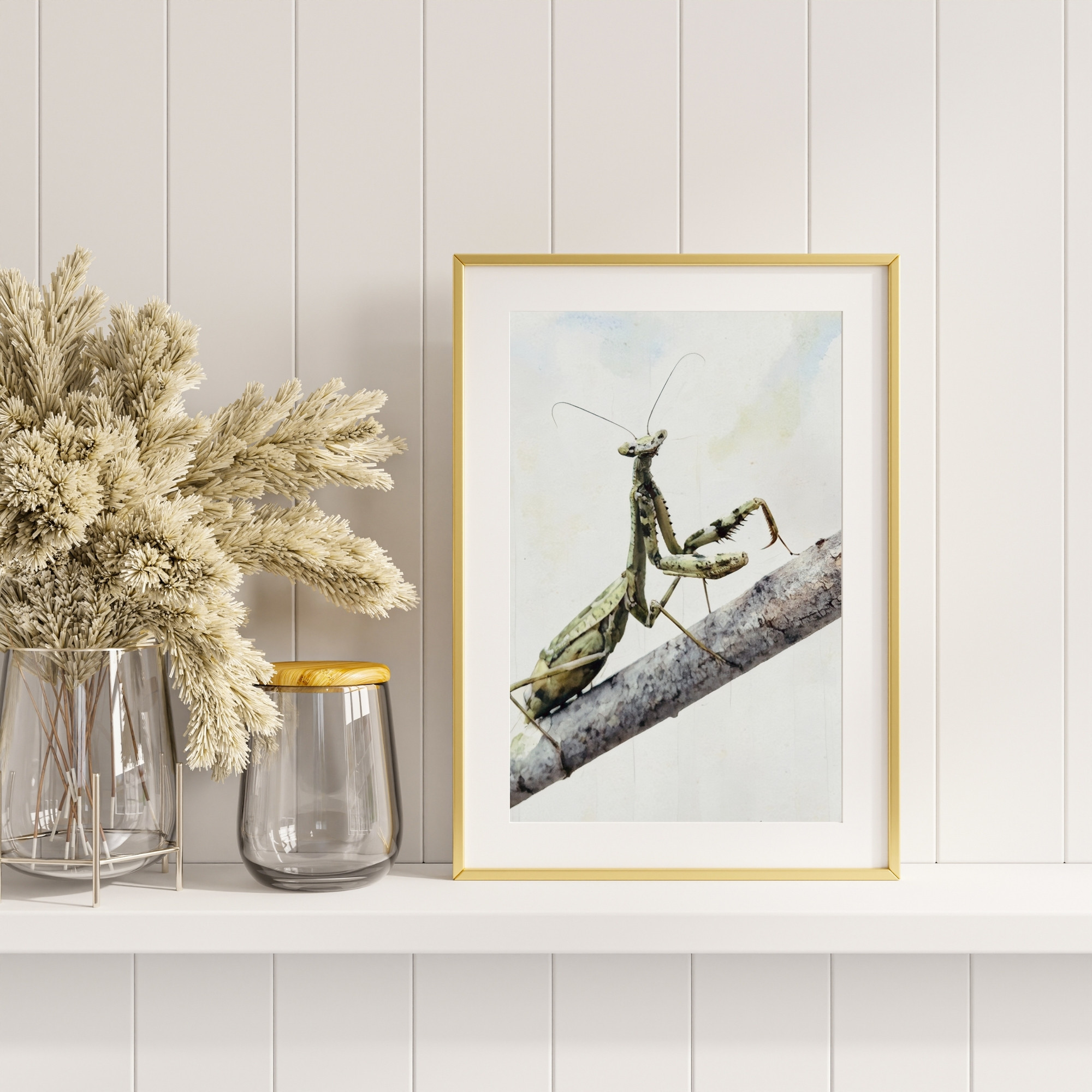
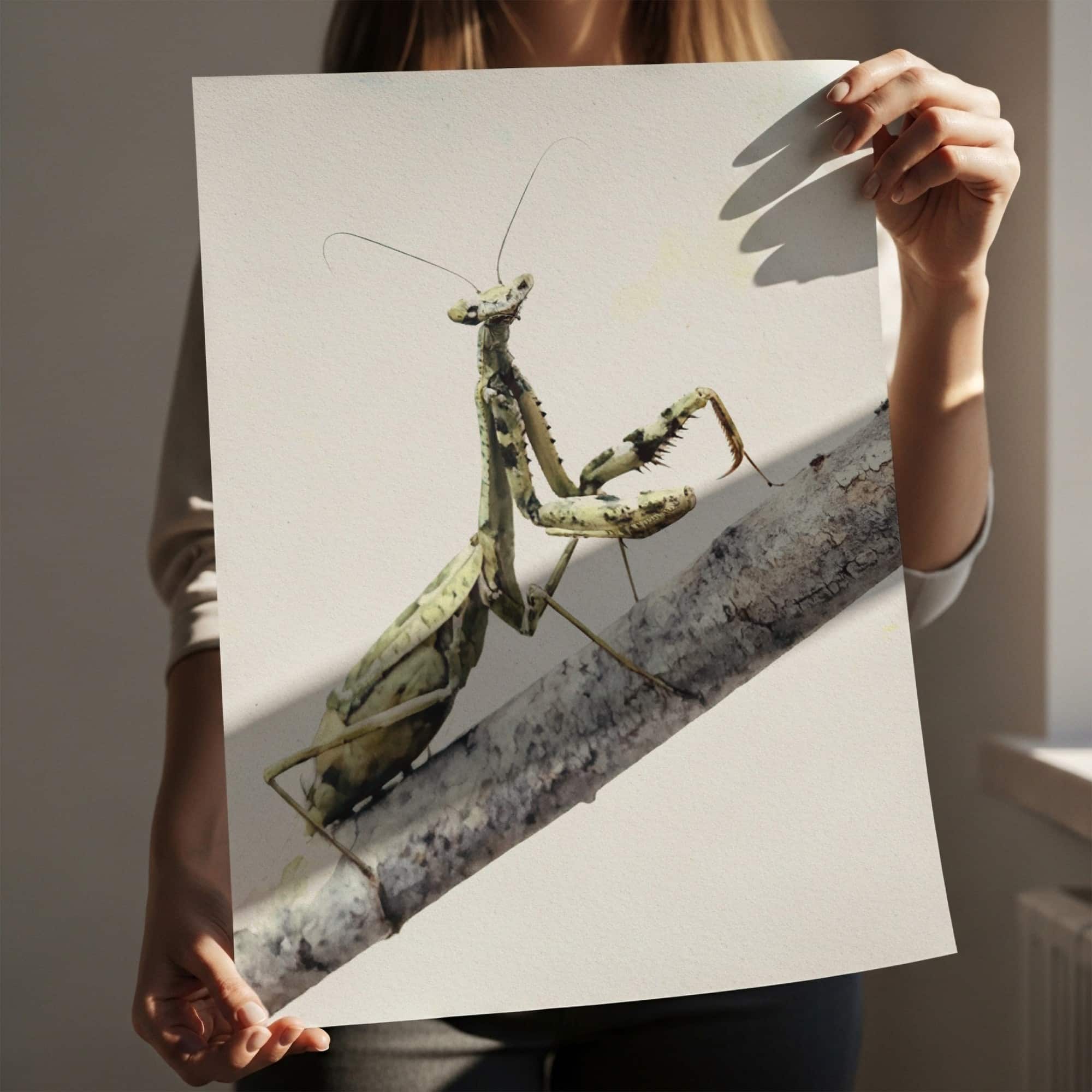
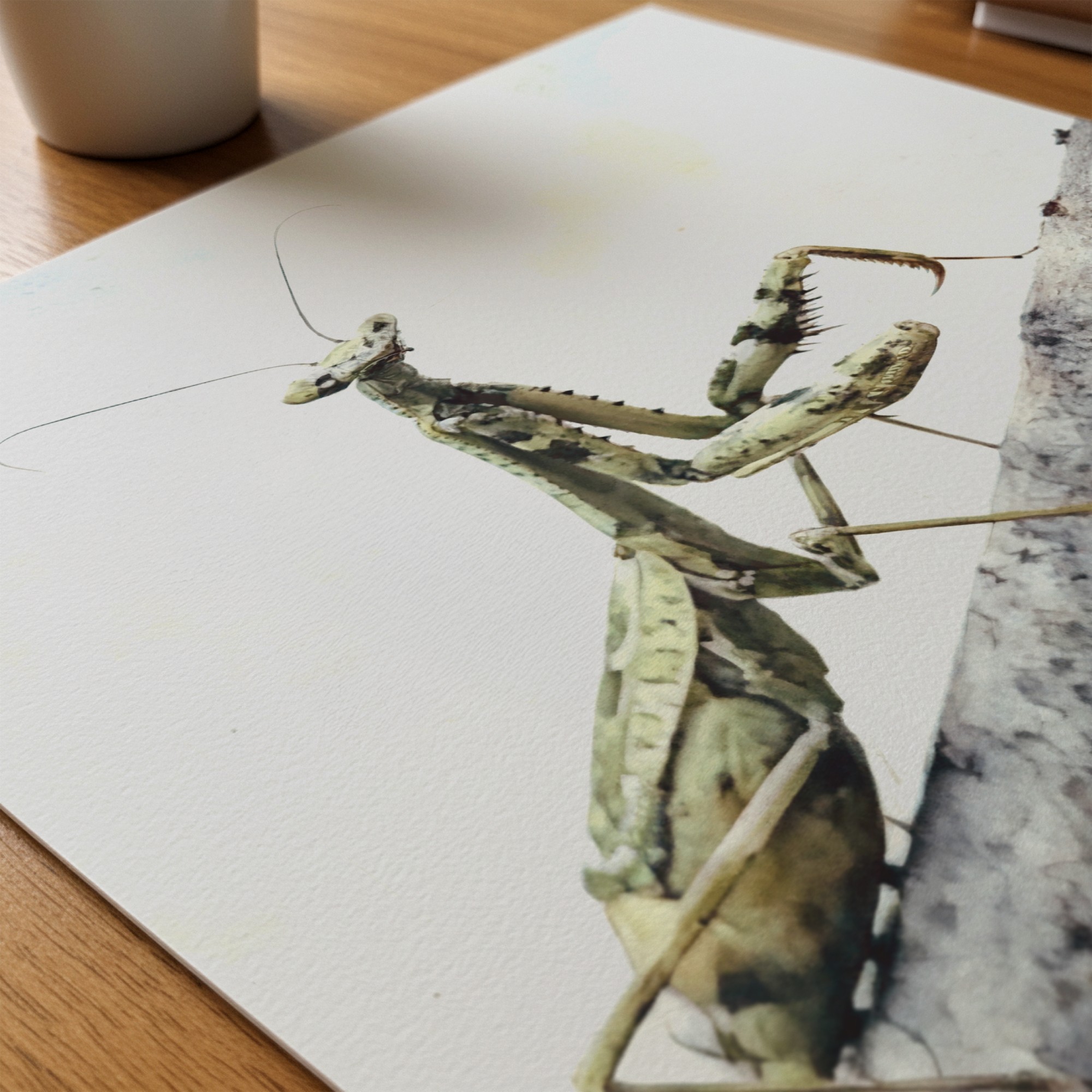
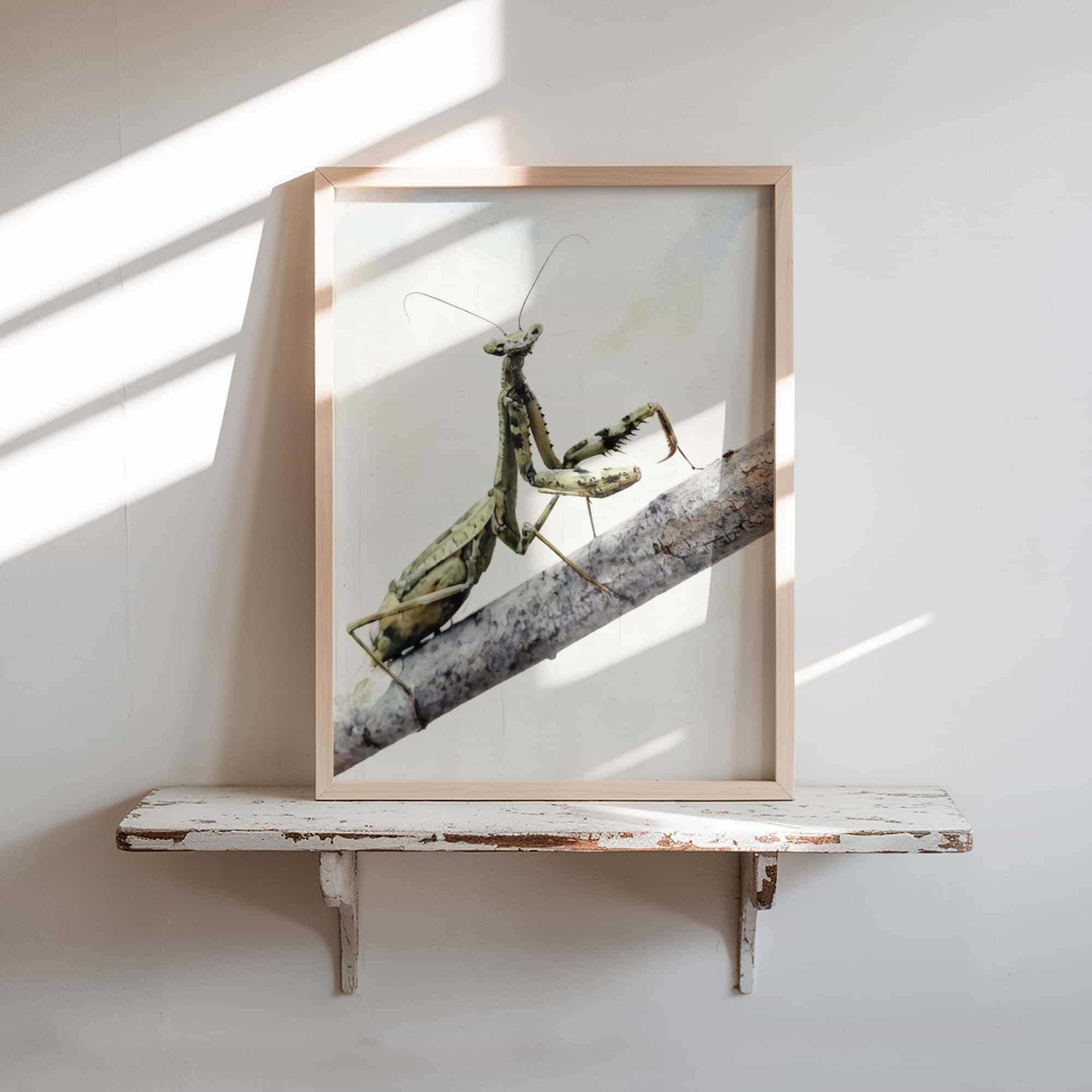
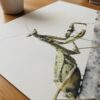
Most motion announces intention; Quiet Scout suggests it. The mantis lifts one foreleg with such measured calm that upward becomes a direction, not a destination. The diagonal branch forms a quiet vector, and the muted greens hold their space without demand. From across the room, the insect reads like a single confident line; up close, the hinge of each segment reveals motion made of choices, not impulse.
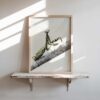
In a hallway, Quiet Scout shifts passing into progress—the body angles forward, so people do too. On a landing, it gives pause a purpose; the eye follows the branch long enough to reset pace before continuing. In an office, the piece doesn’t ask for focus—it models it, turning attention into something selected rather than chased.
Within Small Adventures, Quiet Scout sets the principle. Woodland Commuter turns that principle into tempo; Sunlit Lookout translates awareness into readiness. The trio isn’t about insects at all—it’s about attention as a habit, not a reaction.
What remains after looking is the posture. One step lifted, no urgency, nothing wasted. The print doesn’t motivate; it removes the need for motivation by making forward feel inevitable. That’s why it settles a room. It doesn’t point the way—it shows that the way is already chosen.